Back to Site
Showing posts with label Feather Berkower. Show all posts

Tuesday, January 24, 2017

Your Top 10 Questions About Body Safety

1.  At what age should I begin talking with my kids about body-safety? 

Parenting Safe ChildrenIt's never too early or too late to start talking with children about their body safety, as long as the information is age-appropriate and
presented without fear. For example, when you're bathing your 18-month-old daughter, you might say:

"Mommy is cleaning your back and your legs. Now Mommy is helping you clean your vulva. Your vulva and vagina are your private parts. You're the boss of your body."

As your child gets a little older, you would add to the body-safety rule: "Your vulva and your vagina are two of your private parts, and no one is allowed to touch your private parts unless you need help cleaning them, or your private parts are hurt or sick and the doctor or nurse needs to examine them. And I will always be in the room if the doctor has to look at your private parts."

In the words of a two-year-old child, whose mother has been teaching body-safety concepts for over a year, "My vagina is mine!"

If you have a six-year-old child and you have not discussed body safety yet, you certainly can begin now. When your adorable child strips off his/her clothes running around the house, giggling while the neighbors are over, you can teach your child that when there is company in your home, clothes stay on, and private parts stay covered.


2.  When should my kids stop bathing with each other and when should I (we) stop being naked in front of them?


It is common for children to begin showing modesty around age seven or eight, but it could be as early as five, or even either side of ten. Your child may seek greater privacy when he or she gets dressed or uses the bathroom, and your child may tell you that he or she does not want to bathe with siblings any longer.

If your child doesn't express modesty through privacy requests, you might bring up the topic through teachable moments. For example, when siblings are bathing together, you might say:

"If at some point either of you prefer to bathe without your sister (or brother), that's perfectly fine because in our home we respect each others privacy."

I want to acknowledge that separate bathing, with two or more kids, means more work for parents, so you might consider other ways to
reinforce privacy.

A word about nudity: Depending on your values, you may or may not be comfortable with nudity in your home. If you do allow nudity, be sure to reinforce body-safety rules and consider introducing boundaries if any family member expresses discomfort. Also be sure to have everyone clothed when other children or adults are visiting your home.

3.  Do I have to ask permission every time I kiss or hug my child?


In Parenting Safe Children workshops and in my book, Off Limits, I discuss the importance of allowing children to choose if, when, and with whom they hug and kiss. Why is it so important to give children this choice? Because by teaching children early on about boundaries, you are setting the stage for mutual respect and consent throughout their lives.

Parenting Safe Children
 And it turns out that a child who can say "No" to a loved one in a safe environment has a better chance of saying "No" if approached in an unsafe situation. For this reason, I recommend getting consent, particularly with younger children. You might say, "May I have a kiss?" or "Do you want a kiss?" When you ask, and a child grants or denies permission, you are empowering your child to be the boss of his or her body. And sometimes, a child who feels empowered will then rush over to hug you; on the other hand, if your child runs off asserting his/her right to choose, you can feel good knowing that you are helping your child understand the ever important concept of consent.

With older kids, you can also read body language, and when you know your child doesn't want to be smothered with kisses, just name it -- e.g., "As much as I want to give you hugs and kisses, I can see you don't want them now and that's your choice. You always get to choose whether you want to be touched, or not."

If you're having trouble bringing a family member on board with this body-safety rule, please share this newsletter and invite that individual onto your prevention team.

4.  If my child doesn't ask questions or seem curious about sex, should I bring it up?  


Yes! Be proactive and look for teachable moments to open conversations. Some children are reluctant to ask questions about sexuality, or just don't ask a lot of questions in general. Your child may never ask, but it's still important for you be their first correct source of information.

You can normalize conversations about sexual development at different stages in your child's growth. For example, if your five-year-old child stares at your menstrual blood in the toilet but doesn't ask questions, use it as a teachable moment and provide basic information. "Mommy has her period right now which means there's some blood coming out of her vagina. Mommy is not hurt. The blood is coming out because Mommy is not growing a baby. When a baby grows, the blood feeds the baby."

Your child might say, "Oh" and run off to play, but you've started the  conversation and have let your child know that no topics are off limits. When discussing sexual development with children, all you ever have to do is just give the facts and tell the truth.

5. What if I teach my seven-year-old child about sex and he/she tells friends about it?

Parenting Safe Children
 Of course kids are going to discuss sex with their friends! It's fascinating, right?

I recommend being proactive by letting your children's caregivers know that you have discussed sex. If your child has a best friend, you might even tell his or her parents. In the same conversation, reinforce your child's body-safety rules.

Remember to avoid saying to your child, "Don't tell your friends about sex." If you do so, you'll be contradicting your "no secrets" rule, and kids will tell their friends anyway. If it's really a concern to you, you might say: "Many times parents like to be the ones to teach their children about sex, so let's let Liam's parent(s) tell him when they're ready."

6.  How do I know if my toddler is safe? She can't tell me if someone has broken a body-safety rule?

The fewer caregivers you have, the lower the risk of abuse. If you don't have the option of limiting caregivers, be sure to talk with every caregiver about your child's body-safety rules and invite each one onto your prevention team.

While screening is your best prevention tool, it's also important to know the signs of sexual abuse. (See Off Limits: A Parent's Guide to Keeping Kids Safe from Sexual Abuse.)

 7.  How do I speak with my children about touching their own genitals?

Like any other conversation with children, talk about touching genitals candidly, accurately, and perhaps most importantly, without shame. Your child will present you with ample teachable moments to introduce and reinforce body-safety concepts alongside your values, and it really is possible to answer kid's questions in an age-appropriate way.

Consider this common situation: Your child has her hands in her pants. It could be in public, when relatives are visiting, or while playing with other children, but here's what a response might look like:

"It's okay to touch your vulva/vagina, but that's something you do when you're by yourself. Your vulva and vagina are private parts of your body, so you touch them when you have privacy."

And then you would redirect your child's attention to something else.

It's even okay to acknowledge pleasure. Consider this exchange between a Dad and his 4-year-old son:

"Dad, look It's so big and purple!"

"Yes, that's because when you touch your penis it feels good."

Fast forward to fifth or sixth grade, and now age-appropriate discussions might include nocturnal emissions and an explanation that an orgasm is a pleasurable feeling that comes from your penis being touched -- and that it's normal and okay. Remind your child that he can touch his own penis but others cannot until he gives consent as an older teen or adult.

I know talking about masturbation may be uncomfortable, but just like you nurture your child's emotional, spiritual, and physical development, it's important to nurture your child's sexual development. Why? Sexual offenders look for children who are uninformed about sex so the offender can teach the child. The more you're available to your child with information about sex and
sexuality, the more likely your children will go to you for information, and the less vulnerable your child is to sexual abuse.

8.  If I teach my kids about sex in primary school, isn't it going to make them curious to try sex?

Parenting Safe Children

Contrary to popular belief, talking to kids about sex does not make them go out and have sex. Not talking about sex and sexuality, however, does contribute to misinformation, confusion, shame, and body image issues. And most pertinent to this discussion, talking with children about sex and sexuality, in an age-appropriate way, empowers children and teens around body safety. It lets them know that no topic is off limits, which makes kids more likely to speak with you about both safe and unsafe situations.

You can certainly reinforce your values while having conversations about sex. For instance, "I'm really glad we can talk about sexuality because I don't want you to be confused or get misinformation from other kids. In our family we really value ..."

9.  Do sex offenders "groom" children in front of other people?


Yes, sometimes offenders will groom right in front of you because they want to desensitize you to grooming behavior. Consider this situation: A neighbor spends more time playing with children than adults, and is seen pulling up a child's shirt and tickling a child's belly. By engaging in this seemingly playful behavior in front of you, the offender wants you to think, "Gosh, he's so great with kids," and hopes you will not set boundaries.

I am not suggesting that all adults who play with and tickle kids are offenders, but rather that it's important to learn the signs of grooming, which I discuss in Off Limits and the Parenting Safe Children Workshop.

10.  What happens when a report of child abuse is made to Child Protective Services (CPS)?

 Child Protective Services (CPS and sometimes called Department of Children & Family Services) is a government agency and its mission is to keep kids safe. When you report actual or suspected abuse to CPS, a screening team reviews the reported incident and determines, based on the state's criteria, whether to investigate it. If the incident does not meet the state's criteria, the report is kept on file anyway, which is why it's important to report suspected abuse. If the incident does meet the state's criteria, the child is interviewed by a qualified interviewer who determines if the child is in imminent danger and what action should be taken. When the alleged offender is not a family member, law enforcement may get involved; otherwise, social services remains involved.

Remember, the purpose of making a report is to protect the child. CPS wants to keep families together. 


For more information about keeping children safe from sexual abuse, visit parentingsafechildren.com

Saturday, December 24, 2016

Grandma Wants a Hug – Teachable Moment

Parenting Safe Children ImageThe holidays are a time of greetings and affection, so it’s particularly important to remember that children and teens are safer when they get to choose when and with whom to show affection.

If a family member or friend wants to greet your child with a hug or kiss, and your child does not want to, then seize this teachable moment and stand up for your child by modeling healthy boundaries and communicating clearly.

Grandma: “Oh, it’s so good to see you. Give grandma a hug.”

Mom or Dad: “I know you’re a hugger, Mom, but we’ve taught Darius that he gets to choose when he shows affection and it looks like he doesn’t want to hug right now. Darius, is there another way you'd like to greet grandma besides hugging her."

I know how natural it is for parents and grandparents to want to shower their children and grandchildren with hugs and kisses, but giving children a choice about physical affection teaches that consent matters.

It is never a child’s job to manage the feelings of other people. For more on this topic, check out the Parenting Safe Children December 16 post on Facebook.

Saturday, October 29, 2016

What Does Consent Look Like at Different Ages?

Learning about boundaries and consent is a process that takes place over many years. Here’s what it looks like at different ages.

Toddler:
In the words of a two-year-old child, whose mother has been teaching body-safety concepts for over a year, “My vagina is mine!”

Toddler to Tween:
Mom to her Mother: “I know you love to hug the boys, but we’re teaching them that they get to choose if and when they give and receive hugs, so they know that if they are ever uncomfortable with touch from anyone, they have our permission to refuse.”

Any age:
“My five-year old son was having his annual physical and did not want the doctor to examine his genitals. After reminding him that because I was with him in the room, and it was part of a health check, it would be okay if he agreed. My son did not agree, so we passed on that part of the exam this time and will try again next time.”
Parenting Safe Children

(Note: There are times, of course, when you would have to reassure you child and go forward with the genital exam if there is a medical concern. And yes, there are times when children’s bodies need to be touched for a variety of other medical reasons when they have not given permission  (e.g., medication in ears, shots or even putting sunblock on when a child refuses); however, there are also times when honoring a child’s lack of permission is an excellent reinforcement in teaching consent.

Four to five years old
“My husband and I were out on a date and when we came home, our sitter told us that she was giving our son a bath and he said, ‘No one is allowed to touch my private parts, so I will wash my own butt.’ Our sitter knows our family’s body-safety rules and respected our son’s boundaries.”


Eight or more years old
“My eleven-year old was at a sleepover party and a couple of the kids suggested looking at porn on their phones. My child was uncomfortable but worried about refusing because of the peer pressure. In the end he said to his friends, ‘That stuff is not real and it’s illegal, and I don’t want to look.’ I think he was able to refuse because of our many talks about not compromising himself for others.”

Tween and teen
“I am comfortable kissing and nothing else for now.”

Adult Committed Partners:

“I know tonight is ‘date night’ but I’m really just in the mood to watch a movie and give each other back rubs. Is that okay with you?”

Thursday, August 11, 2016

Winning Gold

I find it unacceptable that USA Gymnastics, the sole national governing body for gymnastics in the US with 3,000 gyms, regularly fails to report allegations of child sexual abuse to authorities. This is yet another example of reckless policy making, individual irresponsibility, and institutional failure on behalf of children.

Everything we know about child sexual abuse prevention indicates that we must take every report of abuse or suspected abuse seriously, no matter whether it’s first, second or third hand. The average age a person discloses child sexual abuse is 40, following decades of shame and fear. By then, how many other children have been harmed by the child sexual abuser?
 

To add insult to injury, USA Gymnastics, like many youth-serving organizations and schools, only conducts criminal background checks. Most people who sexually abuse children are never caught, much less convicted, so background checks are largely meaningless unless conducted as part of a three-pronged strategy that also includes: a) Interview questions about boundaries with children and b) Reference checks.

If the leaders of sports organizations reject best practices and ignore their own moral compass, where does that leave children?

We can and must do better on behalf of all children involved in every level of athletics, from local recreation programs, to school teams, to elite competition. Sexual abuse is not more prominent in one sport over another. All children are vulnerable, but fortunately, there are many small and large actions parents can take to put children first, before the all-consuming power of sports, heroes, and winning.

Here’s exactly what you can do now:

1. Talk with your children about body safety.


Regularly talk with kids about body safety. With all the responsibilities of parenting, it can be tough to continually reinforce body-safety rules, yet it’s important to keep those conversations alive—e.g., “No one is allowed to touch the private areas of your body or ask you to touch theirs. If anyone tries to or does touch your private parts, tell a trusted adult.”
Children don’t always tell when they are being abused because they may have been threatened and/or may fear losing a person (including a coach) they love or admire, or in sports, losing the opportunity to compete.


So remind them, “It’s never too late to tell. I will not be mad at you. I will always love you, and will make sure you get to safely play the sport you love.”
 

For teen athletes, you would modify the body-safety rule and have a meaningful conversation about consent. “Remember that consent is always a ‘must.’ This means that no one is allowed to touch the private areas of your body without your permission (and visa-versa) – and no one has the right to force, coerce, bribe threaten, or manipulate you. It is also never acceptable for an older person in a position of trust or authority, like a coach, to be involved with you or any teen in a sexual way.”

Also talk with your children and teens about texting, emailing and phoning coaches and other adult mentors. Parents or another adult should always be copied on texts and emails. Youth should not be communicating by phone privately with coaches or other adults.

2.  Be vigilant about talking with coaches and administrators. 


Unfortunately, in the quest for power, wins and medals, adults may debase children. If you enroll your child in a program affiliated with a “hero,” or in a program which seeks the spotlight and winning at any cost, screen and screen again. Ask to read the organization’s child sexual abuse prevention policies, ask how the policies translate to practices, and find out how sexual abuse prevention policies and practices are monitored. You have a right to ask, “Has there ever been a concern about anyone in your organization behaving inappropriately with child? If so, how did you handle it?”
 

Ask about background checks and make sure that administrators are conducting background checks and also checking references and asking interview questions about boundaries with children. Lastly, be sure to ask about policies for adults being alone with children because an adult should never be alone with a child – not in the locker-room, field, gym, car, hotel, or at a competition.
 

3.  Be wary of hero worship. 

We cannot honor a person’s stature, position, or notoriety at the expense of children's safety. Think about your own attitudes toward the leaders in organizations which care for your child, and don’t be intimidated about asking hard questions. In fact, the more power the person has, the tougher you may have to be to keep your child safe. You have a right to ask any question and to see both policies and staff training materials.
 

4.  You don’t need proof to protect a child. 

While everyone has a right to due process, do not hesitate to speak up if you see concerning behaviors. Learn the warning signs that someone might be behaving inappropriately with a child—and if you see something or suspect something, tell the organization’s leader, call social services, and/or report it to the police. If you don’t, you are complicit and can be held liable. If you are scared or nervous to speak up, talk with another parent first or call Parenting Safe Children for a consultation.

If you don’t get an immediate and satisfactory response, you may be dealing with an organization or team that puts winning before safety, in which case, keep reporting up the chain and call the police if you have not already done so. Feel free to download for free this Parenting Safe Children resource: Behaviors to Watch Out for When Adults Are with Children 

5.  Own the responsibility. 

We all, as individuals and members of our communities, share responsibility for keeping children safe. Make sure the volunteers, staff, and administrators who interact with your children in school and youth programs have been trained to honor and uphold the body safety of all children.

If you would like some additional support on how to invite your child’s coach and youth sports program onto your prevention team, please see the Parenting Safe Children video: Talking with a Sports Coach about Body Safety

For more information about the source investigative reporting on USA Gymnastics, see A blind eye to sex abuse: How USA Gymnastics failed to report cases: 
 

Back to School 2016


This is your annual reminder to invite your day care or school personnel onto your prevention team by discussing your children’s body-safety rules with teachers, paraprofessionals, administration, and classroom volunteers. 

Download the free Parenting Safe Children Back-to-School Screening Packet and have a conversation with your day care or school staff.

The packet is also useful for parents with children in daycare, but be sure to include questions about policies around diaper and clothes changing. Make sure there are no opportunities for a staff member to be alone with a child. In-home daycare providers should also have specific policies about how non-staff family members interact with children. 
   
Policies alone are not enough, however, so also ask how practices are monitored. As you are talking with the director, look for open and forthcoming communication. Every school and day care facility has a responsibility to have a policy manual, but many still do not. If your school or day care does not have specific policies and monitoring in place, ask about plans to do so and then make whatever decision you feel good making on behalf of your child, based on the response.

To sign up for a Parenting Safe Children Workshop, visit parentingsafechildren.com

Monday, June 6, 2016

Bathroom Panic

I’ve been asked many questions about transgender men and women using bathrooms and parental concerns about sexual abuse. The questions themselves sometime imply that transgender people are more likely to abuse and this reminds me of a similar myth that is still perpetuated about Gay men.

Fact Check: Gender identity and same sexual orientation are not predictors of child sexual abuse. The vast majority of child sexual abusers are heterosexual males.

North Carolina’s House Bill 2 and similar legislation ban people from using public bathrooms that do not correspond with the sex listed on their birth certificate. Proponents of such legislation argue that it’s important because a transgender person, or someone posing as transgender, might otherwise enter a women’s restroom and attack a young girl.

Fact Check: There are hundreds of nondiscrimination measures in place across the United States, and according to law enforcement officials, there has not been a surge in bathroom victimizations.

Unbeknownst, you and your children have been sharing public bathrooms with transgender men and women long before North Carolina passed House Bill 2 and well before Target announced a policy allowing transgender people to use the restroom of their choice. We didn’t worry it about it then and we shouldn’t worry now.

Fact Check: Child sexual abuse typically takes place in homes, youth organizations, schools, camps, and places of faith – not typically in public bathrooms.

“Stranger danger” is among a parent’s worst fear and such occurrences garner a great deal of media attention because they are brazen and sometimes horrific, but in day-to-day reality, people who sexually abuse children typically “groom” children and teens over days, weeks, and months. The abuser is not just alone with the child, but has authority over the child and takes advantage of the child’s trust.

Fact Check: 90-93% of child sexual abuse is committed by someone the child knows and trusts, who is already in their life – not by strangers.


Parenting Safe Children
Test Your Knowledge
This statistic may not feel entirely reassuring because it means that 7-10% of abuse is committed by someone the child does not know, but this is not necessarily in a bathroom.

Female survivors are speaking up as well and a few have shared in the press that it would be traumatic to find a person with male genitals in the bathroom. My heart goes out to every survivor healing from sexual assault. It may be helpful to know that most gender neutral bathrooms, particularly at this point, are single-stall bathrooms – often labeled “Family Restroom” –  so anyone using that bathroom is alone anyway.

In the absence of facts, I believe that people are contributing to a climate of discrimination that hurts transgender people – and does nothing to keep children safe from sexual abuse. In fact, discrimination not only hurts the group whom it targets, but in this case it’s a dangerous distraction. I urge people to redirect their focus to meaningful ways of keeping children safe.

  1. Educate yourself about grooming behaviors so you can spot behaviors of concern.
  2. Teach children the difference between secrets and surprises. A secret is something that someone asks you “never” to tell and makes you feel uncomfortable. A surprise is something that makes you feel good and will come out into the open like a gift or a party.
  3. Maintain a “No secrets” policy in your home. Let your kids know that you don’t have secrets, only surprises. Instead of saying, “Don’t tell Mom I let you stay up tonight or we’ll both get into trouble,” you might say, "I'll let you stay up late tonight and if Mom and I disagree about bedtime, we'll work it out. It's not your problem."
    Parenting Safe Children
  4. Discuss boundaries around touch with all of your child’s caregivers, including family members, coaches, teachers, and faith leaders, and let caregivers know that your child does not keep secrets and has permission to tell you everything.
  5. Let adults know that your child has permission to say “No” if he or she ever feels unsafe.
Parenting Safe Children stands in unison with 250 national, state and local organizations, that work to prevent child sexual abuse or work with sexual assault and domestic violence survivors, in supporting equal bathroom access for transgender people.

Wednesday, May 11, 2016

Prevention or Discrimination?


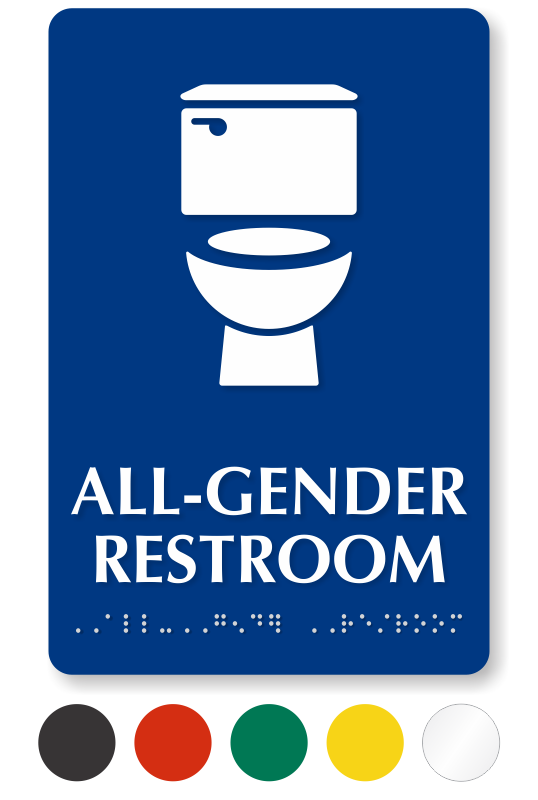
http://images.mydoorsign.com/img/lg/S/all-gender-restroom-toilet-sign-se-6055.png


I’ve been asked a lot of questions lately about transgender men and women using bathrooms and parental concerns about sexual abuse. 

North Carolina’s House Bill 2 law and similar legislation ban people from using public bathrooms that do not correspond with their biological sex. Proponents of such legislation argue that it’s important because men might otherwise enter women’s restrooms and attack young girls.


Well, I’ve got news for you: You have been sharing public bathrooms with transgender men and women long before North Carolina passed House Bill 2 and well before Target announced a policy allowing transgender people to use the restroom of their choice. We didn’t worry then and we shouldn’t worry now – if people simply embrace fact over myth, acceptance over fear, and follow basic Parenting Safe Children safety rules.


First the facts:
  • There are hundreds of nondiscrimination measures in place across the United States, and according to law enforcement officials, there has not been a surge in bathroom victimizations. Here’s why:
  • 90% of child sexual abuse is committed by someone the child knows and trusts, who is already in their life – not by strangers.
  • Child sexual abuse takes place in homes, youth organizations, schools, camps, places of faith – not typically in retail or large public bathrooms.
  • People who sexually abuse children typically “groom” children and teens over days, weeks, and months. The abuser is not just alone with the child, but has authority over the child and takes advantage of the child’s trust.
Yes, it’s important to teach children safety rules about using public bathrooms, just like you would educate your child about safe practices for walking home from school. For instance, teach your child to use public bathrooms in groups of two or more and to let an adult know when separating from a larger group to use the restroom. If it’s a younger child, you’ll either be accompanying him or her, or standing outside the door.

In the absence of facts, I believe that people are contributing to a climate of discrimination that hurts transgender people – and does nothing to keep children safe from sexual abuse. In fact, discrimination not only hurts the group whom it targets, but in this case it’s a dangerous distraction. I urge people to redirect their focus to meaningful ways of keeping children safe.

  1. Educate yourself about grooming behaviors so you can spot behaviors of concern.
  2. Teach children the difference between secrets and surprises. A secret is something that someone asks you “never” to tell and makes you feel uncomfortable. A surprise is something that makes you feel good and will come out into the open like a gift or a party.
  3. Maintain a “No secrets” policy in your home. Let your kids know that you don’t have secrets, only surprises. Instead of saying, “Don’t tell Mom I let you stay up tonight or we’ll both get into trouble,” you might say, "I'll let you stay up late tonight and if Mom and I disagree about bedtime, we'll work it out. It's not your problem."
  4. Discuss boundaries around touch with all of your child’s caregivers, including family members, coaches, teachers, and faith leaders. Let each person know that your child does not keep secrets and has permission to tell you everything.
  5.  Let adults know that your child has permission to say, "No" if he or she ever feels unsafe.
Parenting Safe Children proudly stands in unison with 250 national, state and local organizations, that work with sexual assault and domestic violence survivors, in supporting equal bathroom access for transgender people.

Test your Knowledge about Child Sexual Abuse.


Tuesday, April 28, 2015

I am a Radical Mama

by Julia Julian, Colorado Mom

I am a radical mama. I teach my children they are the boss of their bodies. In our family we do not keep secrets. We talk about everything. We listen to the good, the bad, and the ugly. NO means NO. We play “What if” games. We teach the names of our body parts. “Mom” my youngest use to say, “You have a china”. “Honey I am a girl; I have a vagina.”  “Mom, I came out of your penis.” “Sweetheart, you have a penis because you’re a boy.” I teach my boys to listen to their inner voice, their gut, their intuition, the Holy Spirit, or whatever you want to call it. For myself, I call it my mama voice.

When I was a little girl, my mom would scare me. “Don’t let men even touch your elbow” “Men and women,” she would say “will corrupt you, hurt you, and ruin you.”  She had good reason. Her father was molested by his aunt since he was a small child. Generations of fear passed down like a heavy baton in the race of life.

I wanted to have children and did not want to teach them to fear those who lurk in our own families, places of worship, schools, and sports teams. Those who weave children into their charming web. I wanted my children to be safe without fear, but how?

When my oldest boy was two years old, we heard about this radical class, Parenting Safe Children. My husband attended the workshop. He thought it was the hardest and most gratifying class he had ever taken. I was in awe from what he told me and what I read. Right away our family joined the prevention team.

It has been 5 years since we took Feather Berkower’s radical class. When I sign my boys up for a class, a camp, sports, or church functions, I say, “My boys are the boss of their bodies. We do not have secrets in our family. They are obedient unless they feel their body is not being respected. Are you alright with this?  What are your body safety policies?”  I have said this in group orientations and parents said they have taken the class and are embarrassed to speak up. I tell parents, “try it, practice it, it will protect your child, you will do awesome.”
 
I talk to the people in charge of my children. Some are receptive, some are not. I have encountered all sorts of reactions, facial expressions, whispers, and questions, “what are you talking about” or “are you accusing me of something?”  Other reactions have been positive, grateful, in agreement, and understanding. If I do not protect my boys by just simply talking then who will protect them? No One.

If I do not feel comfortable, my boys do not stay. My boys have said, “Mom I do not feel safe here” so we go. Today my son was showing his soccer coach an "owie." The coach said, “Spit on your 'owie' to heal it, but do not tell your mom or dad.” I was sitting behind them. My five year old reminded him, “I don’t do secrets. I tell my mommy and daddy everything.” And I also followed up with the coach.

When I talk to caregivers I have the mindset of inviting everyone onto my prevention team. In my heart I do this for my boys and for children everywhere. I protect my phone and my laptop by not leaving them with strangers. I wear a seatbelt. I put my money in a bank. I lock my car. I do not want to lock my boys up with fear or put them at risk. I want them to seize the day. So I speak up. I keep it simple. I listen to my inner voice. If people have a problem with this simple talk, then they are not good enough for my boys.

I want to keep my boys safe so they can have the best life possible, full of freedom, joy, and love. Isn’t that what we all want?  

Feather’s workshop is not radical and I am not a radical mama after all.

Friday, April 17, 2015

A Walking Advertisement: My Kids are Off Limits

by Shaundra, Texas Mom

I’ll be honest:  Inviting caregivers onto our prevention team can feel awkward. But sometimes, the awkward conversation is necessary to protect our kids.

I enrolled my son in a week-long summer day camp where I wouldn’t meet the director until 8:00 the morning of camp when I arrived to hand my son over for a day of sports.

As I drove my son to the fields, we reviewed his body safety rules and talked through a couple of “what if” scenarios. But I knew I needed to have a conversation about body safety with the adult in charge in order to advertise that my son is “off limits.”

After checking in and sending my son to warm-up with the other kids, I asked the director for a minute of his time and decided to be as direct and to the point as I could.

“I know you’re busy and this is kind of an awkward question, but I wanted to ask what steps you take during camp to keep kids safe from sexual abuse?”

The director looked surprised but was immediately receptive. “Wow. I don’t usually get asked that question, but it’s so important. ” He went on to share their policies that ensure children aren’t alone with adults and explained their bathroom protocol designed to keep kids safe from the hypothetical stranger-lurking-in-the-bushes near the port-a-potties.

I pushed back to let him know I was less concerned with strangers and more concerned about other children or adults involved in the program being alone with my son, sharing the statistics about how often abuse is committed by those known to a child. He listened sincerely and then addressed those concerns, explaining in detail the structure of the day to assure me that the kids and adults remain together as a large group without opportunity for alone time.

Satisfied with his answers and knowing I’d communicated that our family is aware and paying attention, I left much more comfortable than I’d arrived. And in the end, the conversation was far less awkward anticipated.

About a year and a half ago, we moved out of state to an area where Parenting Safe Children is less prevalent, which means I no longer enjoy the benefits of my previous town’s ever-growing prevention team. I’m having to establish a new safety net for my kids at every turn, which is why I’m particularly excited about the new “Conversation-Starter Cards.” Having a tangible tool linked to a professional organization will lend credibility and authority to the conversations I initiate with teachers, coaches, and friends, providing a context for my "awkward" questions.

And who knows? Maybe one day I’ll be able to arrange for Feather to teach a workshop here in Texas so we can begin to create another “off limits” community.

Wednesday, April 15, 2015

Tickled by a Waitress

by Emily, Colorado Mom

As a parent of two younger kids, a 10-year-old daughter and a 3.5-year-old son, talking about Body Safety to our circle of family, friends, and those with whom we interact is something I have been doing for at least eight years, ever since I attended my first Parenting Safe Children Workshop. However, I still run into new situations that present challenges to me and make me uncomfortable.

The last weekend in February 2015, my daughter and I went for a ski weekend with a friend and her daughter. We had finished up our day of skiing and had just sat down in a casual restaurant for an early dinner. The table was a typical, 4-top square, about 3x3 feet.


The cute, friendly waitress, who looked to be in her late 20s approached the table and asked us what we would like to drink. She came back shortly with our drink order and somewhere in that in-between time of delivering the drinks and ordering, the waitress reached down and tickled my daughter in the ribs, on the side of her body. I finished ordering, handed over the menus, and began to resume conversation when I noticed an uncomfortable look on my daughter’s face. I asked her if she was OK and she said, “The waitress tickled me in my side.” I was surprised and asked her to repeat herself: “The waitress tickled me in my side. Can I switch seats with you?”

My initial response was, “I’m sure she just thought you were cute. You’ll be fine.” But my friend and I exchanged confused glances, and my daughter persisted, “I want to change seats with you because I feel uncomfortable.” So we switched seats so that my daughter was in the seat next to the wall and I was in the seat exposed to the walkway. I asked my daughter if she felt better and she said yes.

Well, then it hit me. After all the years of training, and workshops attended, and education around Body Safety, my daughter’s body had been touched right in front of me in way that made her uncomfortable, and I had almost put a stranger’s feelings over hers. I started trying to explain to my daughter how some people see a cute kid and think of them almost like a doll, and don’t know about the Body-Safety Rules but the more I talked, the more ridiculous I sounded, and the more apparent it became what needed to be done. My friend is actually the one who said, “Maybe you can tell the waitress about the Body-Safety Rules.”


A feeling of terror gripped me as I didn’t want the waitress to be embarrassed, and I didn’t want to make her feel like I was accusing her of something. Simultaneously, and more importantly, I needed to show my daughter that I would stand up for her feelings, and take her seriously, and that all the years of teaching her about Body Safety since she was 2.5-years-old were for a reason – situations like this.

My face felt hot and my heart was beating fast. But I said, “Yes, that is a great idea, and I will talk with her.”

So I got up and walked across the restaurant. I asked her if I could speak with her. I started off by telling her that my daughter said she tickled her and it made her feel uncomfortable. I said, “I know you probably just thought she was a cute kid, but we teach our kids about boundaries and choosing when they can share their bodies and with whom. Have you heard about the Body-Safety Rules?”

Then I continued to explain the “Boss of your body” concept. She said she was a kids’ ski instructor, and she has been around lots of kids, and loves kids, and felt very badly that she had made my daughter feel uncomfortable. I ended with saying that learning this information about Body Safety had changed the way I interact with children -- my own, as well as other peoples’ kids. And I thanked her for taking the time to hear me out. I told her about Parenting Safe Children and asked her to visit the Website for more information and told her that this was all new to me at one time as well. She offered to get us a new waitress and I said that wasn’t necessary, but we didn’t see her again for the rest of the night. I feel certain that our conversation caused her to re-think her interactions with children.

Feather’s words stick with me when an uncomfortable situation presents itself: If your five minutes of being uncomfortable can spare your child a lifetime of discomfort, isn’t it worth it?

This situation showed me a lot about myself. I was surprised and a little disappointed that I still felt so nervous talking to a stranger about Body Safety. And I was thankful that my friend, who also knows about Body Safety, was there to help me through the situation.

I am proud that I was able to show my daughter support and courage. I’m glad that she was able to witness me standing up for her Body Safety and that I could show her that I will listen to and support her feelings. Just the fact that talking to strangers and family members about Body Safety can still cause me so much anxiety is all the more the reason to continue to have the hard conversations, for our kids’ sake.

Tuesday, April 14, 2015

I Sweat and My Heart Pounds – But I Do It Anyway

One mom’s very candid look at screening caregivers


By Cary, Colorado Mom

Screening caregivers. Ugh! It’s the worst. For me, it’s right up there with my annual OBGYN exam, dental cleanings and mammograms…we hate them, but we must go to ensure we are healthy and we aren’t going to get a toothache in the middle of our vacation next month. We go because if modern medicine offers us the chance to prevent something from going wrong with our body, well, then…it’s worth our time and we show up. Screening caregivers for our children offers the same opportunity for prevention… and our children are our most precious treasures, so of course we do it. But it’s hard!

My dream for my community would be that every parent become educated on sex abuse prevention, and we talked about it as openly as what’s for dinner, or what sports our kids are playing or what day the talent show is scheduled. If we were all talking about it, it would be normal. If we were all talking about it, collectively we’d be pretty loud and abusers would hear us. If we were all talking about it, children would be safer and abuse would happen less. It’s that simple. This isn’t one of those worthy causes in the world that needs $2 million fundraiser. Ending sex abuse against children just takes our courage to speak up. So, why aren’t we all talking about it? I catch myself thinking about this too often because I wonder if it will ever get easier or more comfortable.

I’ve attended several of Feather’s Parenting Safe children workshops now, and I remain perplexed about how intimidating it continues to be to have these conversations. It’s not difficult to understand why we should screen them. Feather has given us the words to say, so we know how we should screen them. I completely understand the importance of this prevention practice, but it’s interesting that no matter how many times I ask these questions, regardless of my faith in them, I continue to feel afraid of doing it.

I don’t sweat when I ask a babysitter if he/she has taken a CPR class. I don’t stumble over my words when I ask a daycare facility how they handle discipline or prevent bullying or protect kids from peanut allergies. I don’t almost cry when I ask my son’s teacher if they have a plan in case there is a fire in the building. But for some reason, no matter how many times I ask questions about sex abuse prevention for my children, I start to hyperventilate.

The only difference between the first time and the 20th time is that I now know what to expect, and I guess there is some comfort in that. Before I walk into a screening appointment with a potential caregiver, I sit in my car and I have this conversation with myself, “Ok, you ARE doing this. Your heart is going to start pounding, you’re going to start sweating, your bottom lip is going to quiver and you’re not going to look confident. But you are confident and you ARE doing this! You know this is the right thing to do, so get out of your car and ask the questions young lady! It’s the only way you will have peace of mind, so move it!” And then I picture Feather telling me that I must feel this discomfort, so my kids never have to. I remember her saying that in the workshop, and I carry that voice in my head with me.

Most of the time, caregivers have never heard these screening questions and they are taken off-guard with how to answer. But every once in a while, the person I am screening will say something like, “Thank you for asking these questions,” or “I don’t have a great answer for your questions, but I am so glad you asked and I’ll find out more about that.” In these moments, I no longer feel alone in the room, and that’s what makes all the difference. When we don’t feel alone, we feel less afraid and we speak louder.

Regardless of my fear of screening caregivers, of course I will continue to have these pep rallies with myself in my car, and I will continue to stumble through the screening process for my children because like having a mammogram, I need to know that if I can prevent something terrible from happening to my sweet boys, then of course I’ll show up.

I know I am not alone. I know there are others out there sweating in their cars. So from one terrified mother to another, I want you to know that I feel your pain and you are not alone. I send you big love and support. Please continue to be brave and keep it up! I need your strength to be strong; there is power in numbers, and the energy about prevention education will shift if we all stick together and speak up through our quivering lips.

The next time you’re sitting in your car, trying to rally yourself for one of these screening conversations, think of me sitting right next to you saying, “You’re doing this! You’re not alone! It’s the right thing to do! You’ve got this, you’re not paranoid, so move it!” And maybe someday, if we all stick together, we won't feel alone and it might get easier.